> ## Documentation Index
> Fetch the complete documentation index at: https://help.fieldpulse.com/llms.txt
> Use this file to discover all available pages before exploring further.
# Inventory Audit Reports
> See who changed inventory and when across all hubs, catching discrepancies before they cost you stock.
Use the *Invoices > Inventory Audit* tab to create reports based on inventory changes in FieldPulse. Inventory auditing allows you to keep track of all inventory changes for both regular and serialized inventory. You can view historical changes across the board, per team member, or by specific inventory hubs.
## Benefits of Inventory Audit
* Accountability: Know who made changes to the inventory and when.
* Accuracy: Keep track of discrepancies between expected & actual inventory levels.
* Transparency: Ensure all inventory changes are logged and traceable.
By utilizing the Inventory Audit report, you can maintain an accurate and transparent record of all inventory changes, helping you manage your inventory more effectively.
***
# Create an Inventory Audit Report
## Date Range
Begin by selecting the type of inventory items you'd like to use to generate the report. You can select regular and serialized inventory items, or report on the inventory levels for each product type separately.
Then, select the start date range for which you’d like to report on. Click on the calendar icon to select a date range and click *Load Data*.
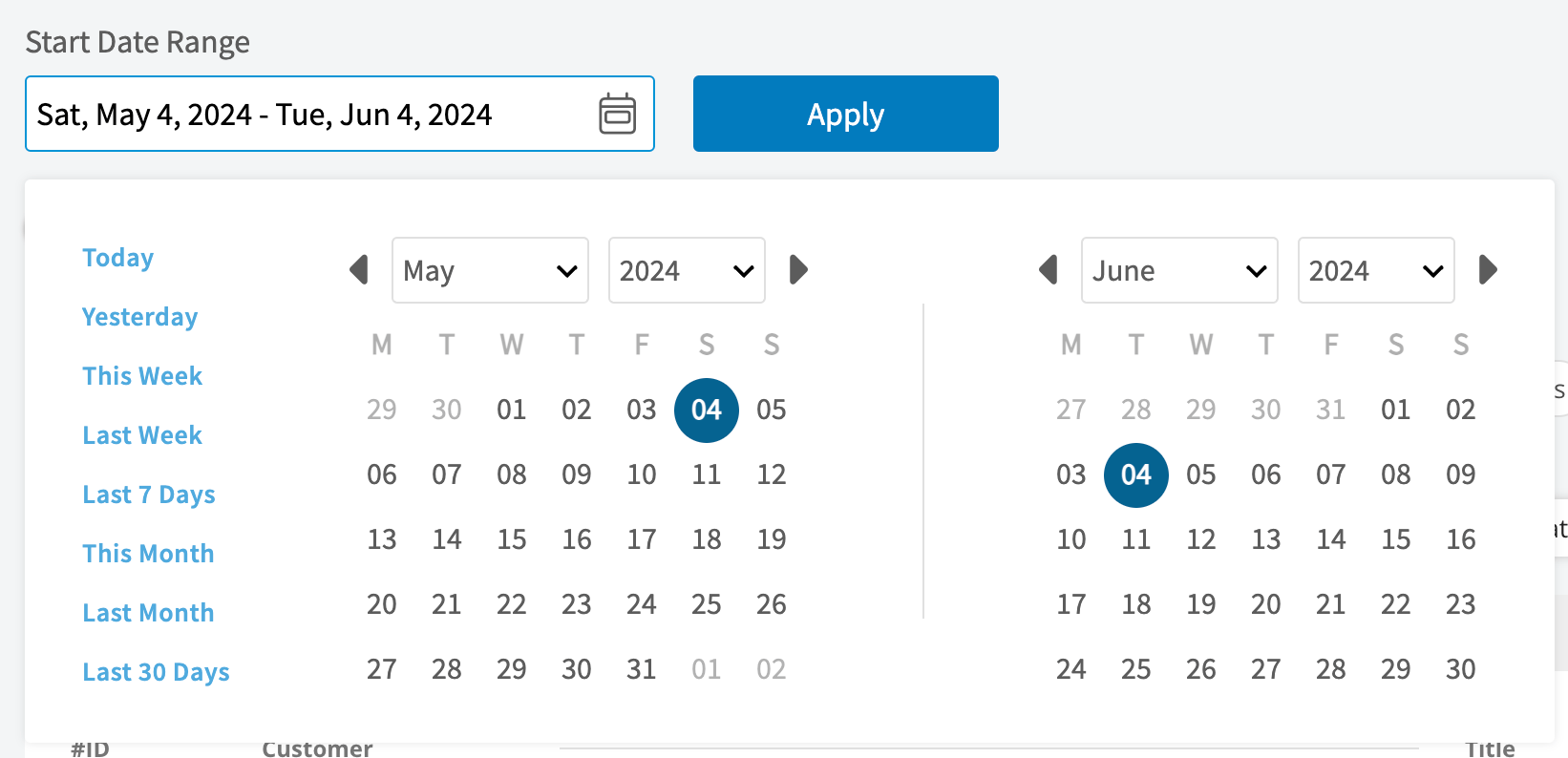 * **Today:** From 12:00 AM to the current time
* **Yesterday:** Previous day from 12:00 AM to 11:59 PM
* **This Week:** From Monday through Sunday of the current week
* **Last Week:** Previous week
* **Last 7 Days:** Previous seven days, including today
* **This Month:** From the first of the current month to the current day
* **Last Month:** Entire month before the current month
* **Last 30 Days:** Previous 30 days, including today
* **Custom:** Use the calendar to select start and end dates
## Columns
* **Today:** From 12:00 AM to the current time
* **Yesterday:** Previous day from 12:00 AM to 11:59 PM
* **This Week:** From Monday through Sunday of the current week
* **Last Week:** Previous week
* **Last 7 Days:** Previous seven days, including today
* **This Month:** From the first of the current month to the current day
* **Last Month:** Entire month before the current month
* **Last 30 Days:** Previous 30 days, including today
* **Custom:** Use the calendar to select start and end dates
## Columns
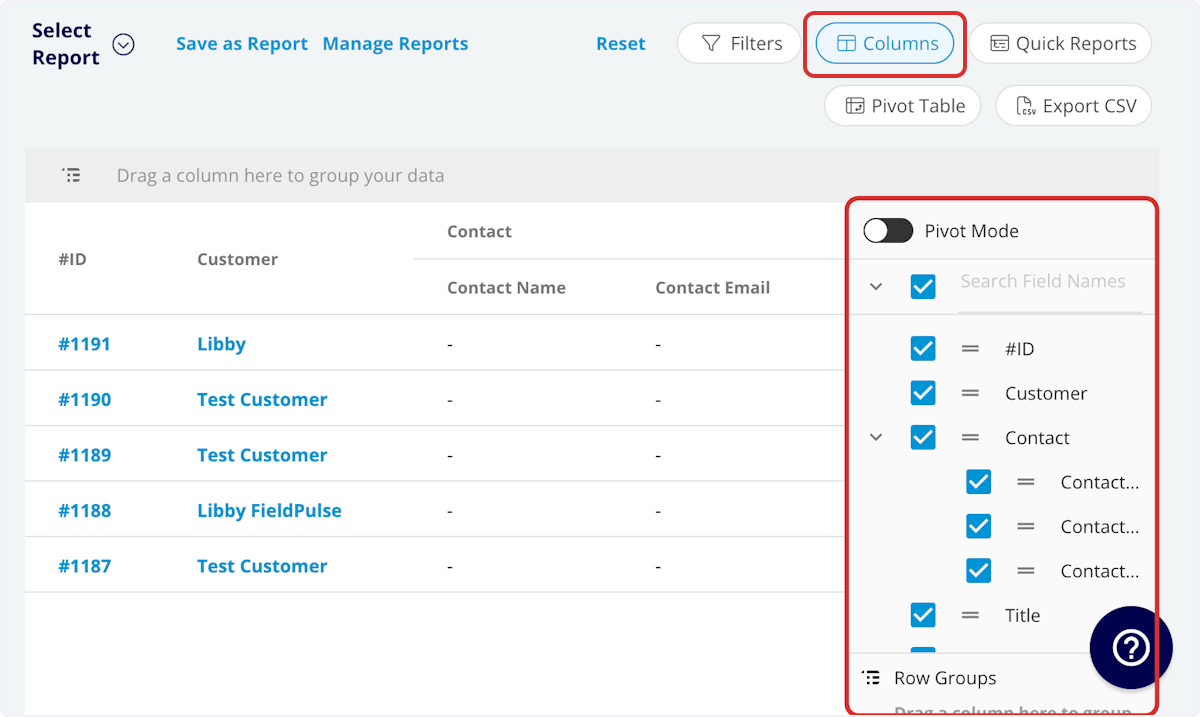 Select the columns to include in your report by clicking *Columns*. The item usage report includes these columns by default:
* **Item Name:** Line item name
* **Date/Time of Change:** Date/time inventory quantity was changed
* **Original Quantity:** Quantity before the change
* **New Quantity:** Quantity after the change
* **Hub:** Location of item
* **Type of Change:** How the inventory was changed (manual adjustment, invoice deduction, order replenishment)
* **Changed By:** User who initiated the change
* **Related Invoice:** Related invoice record #
* **SKU/ID#:** Item #/SKU
* **Serial Number:** Serial number
* **ID Number:** ID number (serialized inventory only)
* **Reference Number:** reference number (serialized inventory only)
* **Supplier Name:** Supplier linked to inventory item
* **UPC:** UPC/barcode
* **Unit Cost:** Unit cost
* **Unit Price:** Unit price
* **Order Number:** Purchase order number
# Filters
Select the columns to include in your report by clicking *Columns*. The item usage report includes these columns by default:
* **Item Name:** Line item name
* **Date/Time of Change:** Date/time inventory quantity was changed
* **Original Quantity:** Quantity before the change
* **New Quantity:** Quantity after the change
* **Hub:** Location of item
* **Type of Change:** How the inventory was changed (manual adjustment, invoice deduction, order replenishment)
* **Changed By:** User who initiated the change
* **Related Invoice:** Related invoice record #
* **SKU/ID#:** Item #/SKU
* **Serial Number:** Serial number
* **ID Number:** ID number (serialized inventory only)
* **Reference Number:** reference number (serialized inventory only)
* **Supplier Name:** Supplier linked to inventory item
* **UPC:** UPC/barcode
* **Unit Cost:** Unit cost
* **Unit Price:** Unit price
* **Order Number:** Purchase order number
# Filters
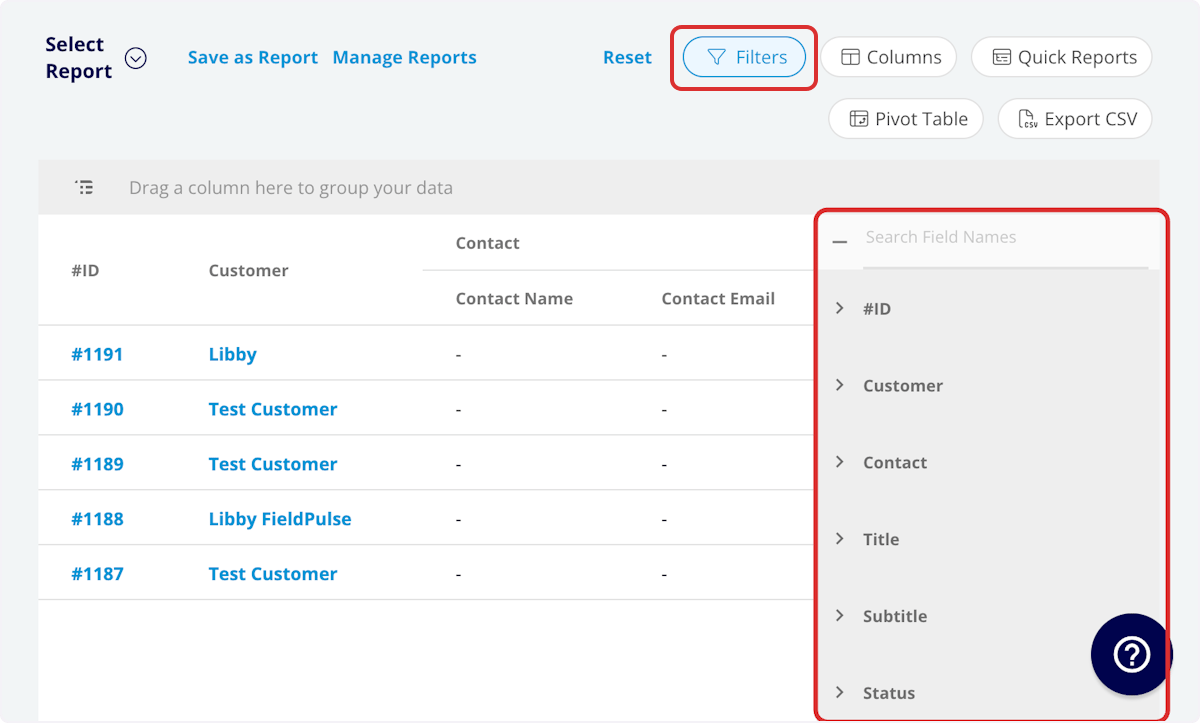 Before running the report, set filters to narrow your results. From the *Filters* icon, select how you want to filter the report:
* **Item Name:** filter by contents
* **Date/Time of Change:** filter by date
* **Hub:** select hub
* **Type of Change:** select change type
* **Changed By:** filter by contents
* **Related Invoice:** filter by contents
* **SKU/ID#:** filter by contents
* **Serial Number:** filter by contents
* **ID Number:** filter by contents
* **Reference Number:** filter by contents
* **Supplier Name:** filter by contents
* **Order Number:** filter by contents
When filtering by contents, you will need to choose an operator and then enter values to filter the data. Use the table below to learn more about each operator.
| **Operator** | **Retrieves Data** | **Example** | **Data Retrieved** |
| ------------------------ | ------------------------------------------ | ------------------------------------------------- | ----------------------------------------------------------- |
| Equals | Equal to a specified value | Created By - Equals Tom Gause | For all records created by Tom Gause only |
| Not Equal | Different from a specified value | Tag - Not Equal to HVAC | For all records except those using the HVAC tag |
| Less Than | Lower than a specified value | #ID - Less than 1144 | For all records below #1144 |
| Less Than or Equal To | Lower than or equal to a specified value | Job Date/Time - Less than or equal to 12/13/2023 | For jobs scheduled before or on 12/13/2023 |
| Greater Than | Greater than a specified value | Job Duration - Greater than 60 minutes | For jobs in the In Progress status type for over 60 minutes |
| Greater Than or Equal To | Greater than or equal to a specified value | Job Date/Time - Greater than or equal to 1/1/2024 | For jobs scheduled on or after 1/1/2024 |
| In Range | Including and between two specified values | #ID - Between 1225 and 1236 | For all estimate records with #IDs between 1225 and 1236 |
| Starts With | Begins with a specified value | Title - Annual | For all job records beginning with Annual |
| Ends With | Ends with a specified value | Location - TX | For all job locations ending with TX |
| Blank | No values are in the field | Subtitle | For all job records with blank subtitles |
| Not Blank | Values in the field | Notes | For all job records with values in the notes field |
***
# Inventory Audit Report Best Practices
* Specify the time frame for the audit.
* Filter by team member or inventory hub to get a comprehensive view of all inventory changes.
* Group the report by *Item Name* to view all changes to a specific item.
***
**Have additional questions?**
*Contact us at [support@fieldpulse.com](mailto:support@fieldpulse.com) or use the chat feature in the bottom right corner of your screen.*
Before running the report, set filters to narrow your results. From the *Filters* icon, select how you want to filter the report:
* **Item Name:** filter by contents
* **Date/Time of Change:** filter by date
* **Hub:** select hub
* **Type of Change:** select change type
* **Changed By:** filter by contents
* **Related Invoice:** filter by contents
* **SKU/ID#:** filter by contents
* **Serial Number:** filter by contents
* **ID Number:** filter by contents
* **Reference Number:** filter by contents
* **Supplier Name:** filter by contents
* **Order Number:** filter by contents
When filtering by contents, you will need to choose an operator and then enter values to filter the data. Use the table below to learn more about each operator.
| **Operator** | **Retrieves Data** | **Example** | **Data Retrieved** |
| ------------------------ | ------------------------------------------ | ------------------------------------------------- | ----------------------------------------------------------- |
| Equals | Equal to a specified value | Created By - Equals Tom Gause | For all records created by Tom Gause only |
| Not Equal | Different from a specified value | Tag - Not Equal to HVAC | For all records except those using the HVAC tag |
| Less Than | Lower than a specified value | #ID - Less than 1144 | For all records below #1144 |
| Less Than or Equal To | Lower than or equal to a specified value | Job Date/Time - Less than or equal to 12/13/2023 | For jobs scheduled before or on 12/13/2023 |
| Greater Than | Greater than a specified value | Job Duration - Greater than 60 minutes | For jobs in the In Progress status type for over 60 minutes |
| Greater Than or Equal To | Greater than or equal to a specified value | Job Date/Time - Greater than or equal to 1/1/2024 | For jobs scheduled on or after 1/1/2024 |
| In Range | Including and between two specified values | #ID - Between 1225 and 1236 | For all estimate records with #IDs between 1225 and 1236 |
| Starts With | Begins with a specified value | Title - Annual | For all job records beginning with Annual |
| Ends With | Ends with a specified value | Location - TX | For all job locations ending with TX |
| Blank | No values are in the field | Subtitle | For all job records with blank subtitles |
| Not Blank | Values in the field | Notes | For all job records with values in the notes field |
***
# Inventory Audit Report Best Practices
* Specify the time frame for the audit.
* Filter by team member or inventory hub to get a comprehensive view of all inventory changes.
* Group the report by *Item Name* to view all changes to a specific item.
***
**Have additional questions?**
*Contact us at [support@fieldpulse.com](mailto:support@fieldpulse.com) or use the chat feature in the bottom right corner of your screen.*