
Who uses this: Admins have full reporting access, and Team Managers can be given it. Service Agents and Limited Agents do not have Full Reporting access. Availability: All regions.An invoice report pulls invoice data — due date, invoice creator, cost basis, profit margin, and commission — into one table from the Invoices tab in raw data reporting, over the date range you choose. That table is how you see what is owed and what a job actually earned.
Overview
An invoice report answers one question about your billing at a time: which invoices match the conditions you care about, and what the numbers on them add up to. Common versions are an overdue invoice list, commission by team member, and a cost basis and profit margin check. Building an invoice report follows the same path as every other raw data report — set a date type and date range, choose the columns, set filters, then read the table. Invoice reporting is part of FieldPulse’s dashboards and reporting. For the parts of the reporting flow that are the same on every record type — saving a report, adding it to your dashboard, and exporting to CSV — see How to Use Raw Data Reporting.Video walkthrough
Video walkthrough: Creating a report in raw data reporting
Before you begin
- Create the invoices you want to report on. See How to Create an Invoice.
- Check that your role has reporting access. An Admin has full reporting access; a Team Manager needs Full Reporting access turned on.
Set the date range
- Select Reporting under the Management tab in the left-side menu.
- Select the Invoices tab, then select Raw Data.
-
Choose the Date Type you want the report to run on.
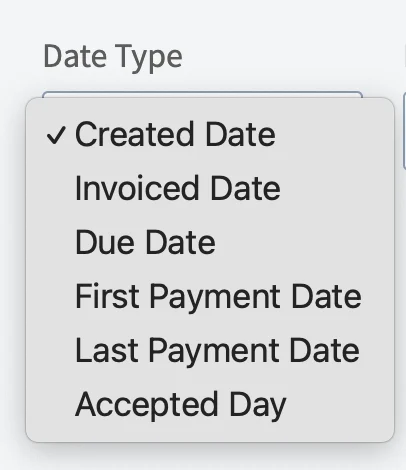 Each date type reports on a different invoice date:
- Select the calendar icon and choose the start date range you want to report on.
- Select Load Data.
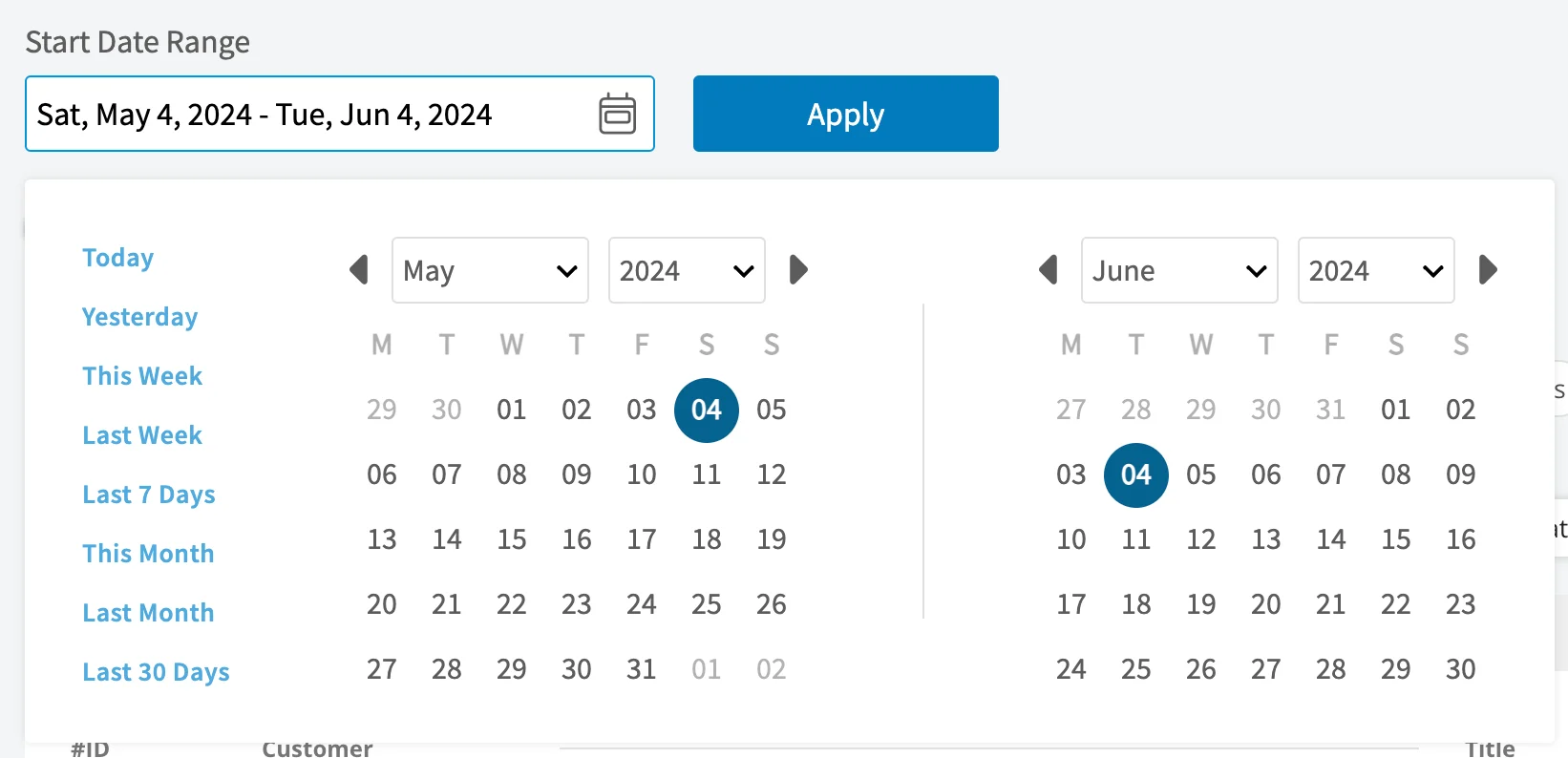
Choose your columns
Select Columns to choose which invoice fields appear in the report table and the order they appear in.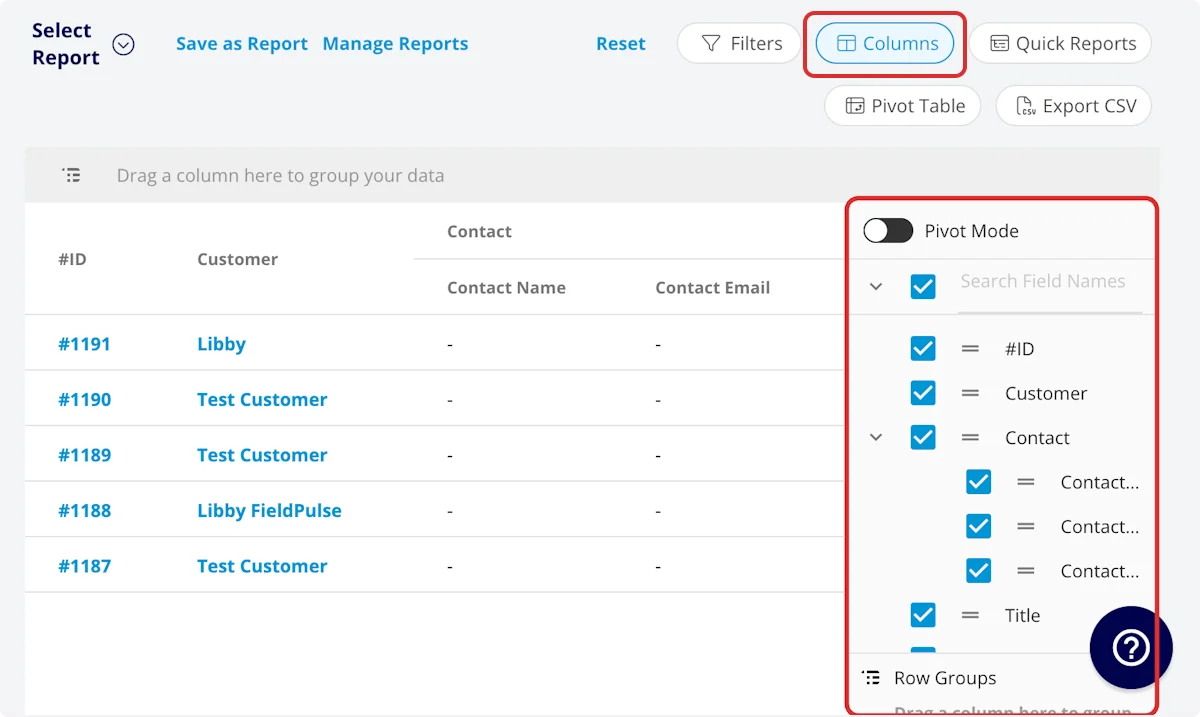
The Customer and Job groups carry fields from the linked customer record and job record into the invoice report.
Customer columns
Job columns
Set your filters
Before running the report, set filters to narrow the results. Select the Filters icon, then choose how you want to filter the report.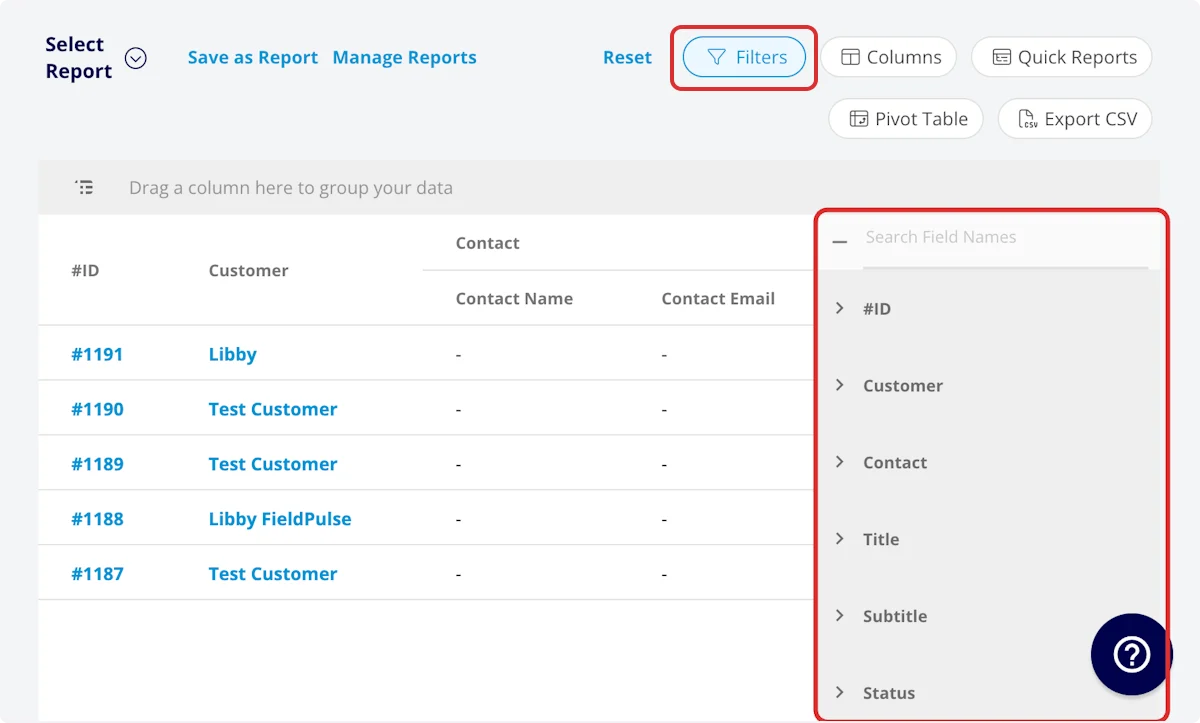
Filter operators
When you filter by contents, choose an operator and then enter the values to filter the data on.Common invoice reports
Each of these reports is a column and filter combination. Customize the columns beyond the ones listed here to suit your business.Overdue invoices
Use this report to view all overdue invoices.- Columns: must include Status and Due Date.
- Filters: Status = Partially Paid or Invoiced, and Due Date = Overdue.
Commission by team member
Use this report to view how much commission you need to pay each team member.- Columns: must include Invoice Creator and Commission. Including Commission Method and Commission % is also recommended.
- Filters: Status = Invoiced or Paid, depending on when you pay commission in your sales process.
- Group by: Invoice Creator. Drag the Invoice Creator column into Drag a column here to group your data above the table to group the invoices under each creator.
This report groups by Invoice Creator, so it works best when commission goes to whoever created the invoice. If you use Related Work Order Assignees or Related Customer Assignee as your default recipient, or you split commission across multiple people, use the Commissions report under Reporting > Commissions instead — it breaks out commission by recipient, whoever they are, so split payouts are accounted for correctly. See How to Create Commission Reports.
Invoice cost basis and profit margin
Use this report to understand your cost basis and profit margin.- Columns: must include Cost Basis and Profit Margin.
- Filters: Status = Invoiced or Paid.
Video walkthrough: Building the overdue invoice, commission, and profit margin reports