
Who uses this: Admins have Full Reporting access, and Team Managers can be given it. Service Agents and Limited Agents do not have Full Reporting access. Availability: All regions.A payment report is built from the Payments tab in raw data reporting, and it pulls your recorded payments — amount, method, date and time, the customer, and the invoice and job each payment is attached to — into one table. That table is how you reconcile what came in over a date range.
Overview
A payment report answers one question about the money you collected: which payments match the conditions you set. Use it to break down collected payments by method, by the team member who recorded them, or by customer, and to match payments back to the invoices and jobs they paid. Building a payment report follows the same path as every other raw data report — set a date range, choose the columns, set filters, then read the table. Payment reporting is part of FieldPulse’s dashboards and reporting. For the parts of the reporting flow that are the same on every record type — saving a report, adding it to your dashboard, and exporting to CSV — see How to Use Raw Data Reporting.Video walkthrough
Video walkthrough: Creating a report in raw data reporting
Before you begin
- Record the payments you want to report on. See How to Collect Payments: 3 Methods.
- Check that your role has reporting access. An Admin has Full Reporting access; a Team Manager needs Full Reporting access turned on.
Set the date range
The payment report uses one start date range, which you set before you load the data.- Select Reporting under the Management tab in the left-side menu.
- Select the Payments tab, then select Raw Data.
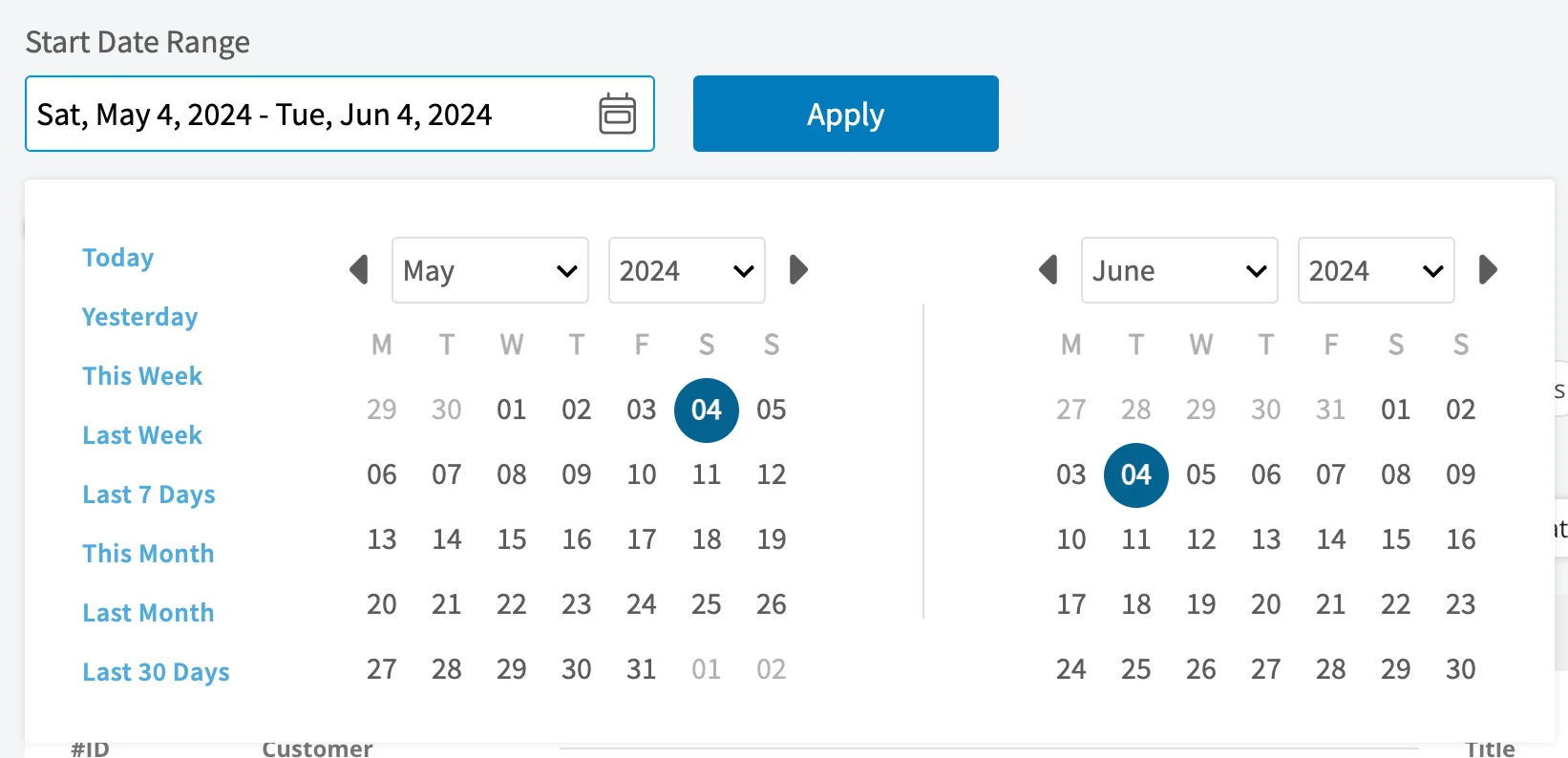
- Select the calendar icon and choose the start date range you want to report on.
- Select Load Data.
Choose your columns
Select Columns to choose which payment fields appear in the report table and the order they appear in.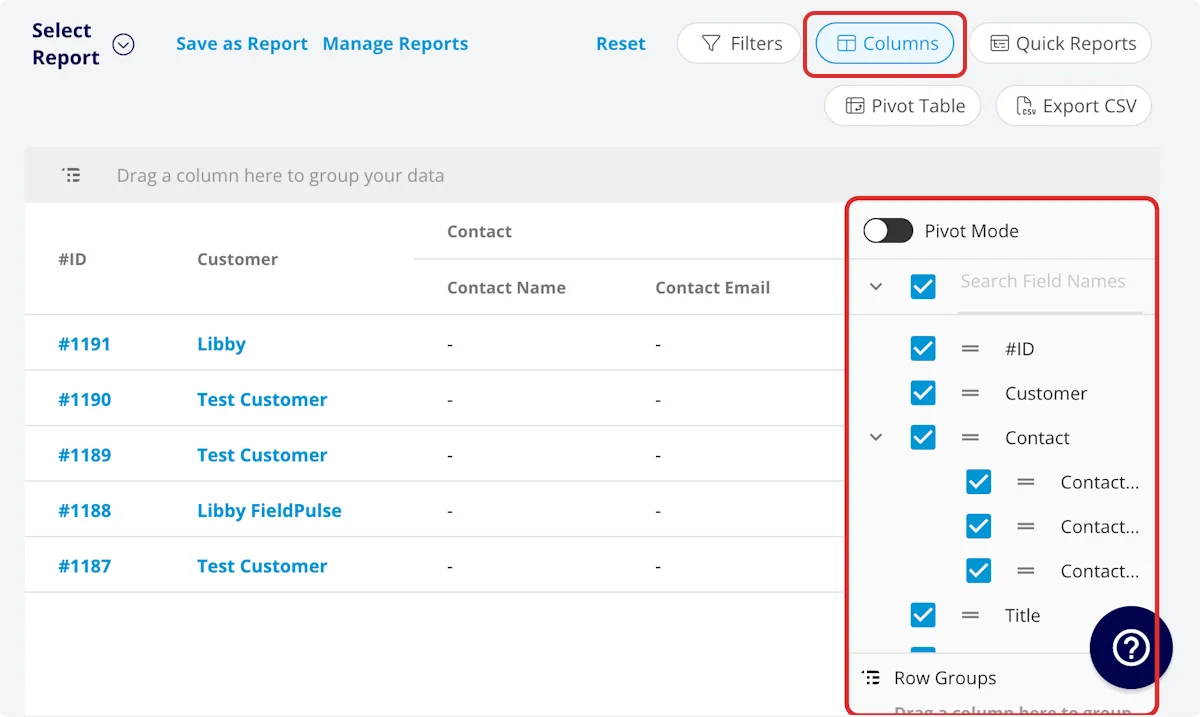
Each payment attempt is its own row. If a payment fails and a later attempt succeeds, the report shows two records, one Failed and one Succeeded. Retries on recurring billing invoices also appear as separate rows.
Payments processed before payment statuses were released do not have a status.
Set your filters
Before running the report, set filters to narrow the results. Select the Filters icon, then choose how you want to filter the report.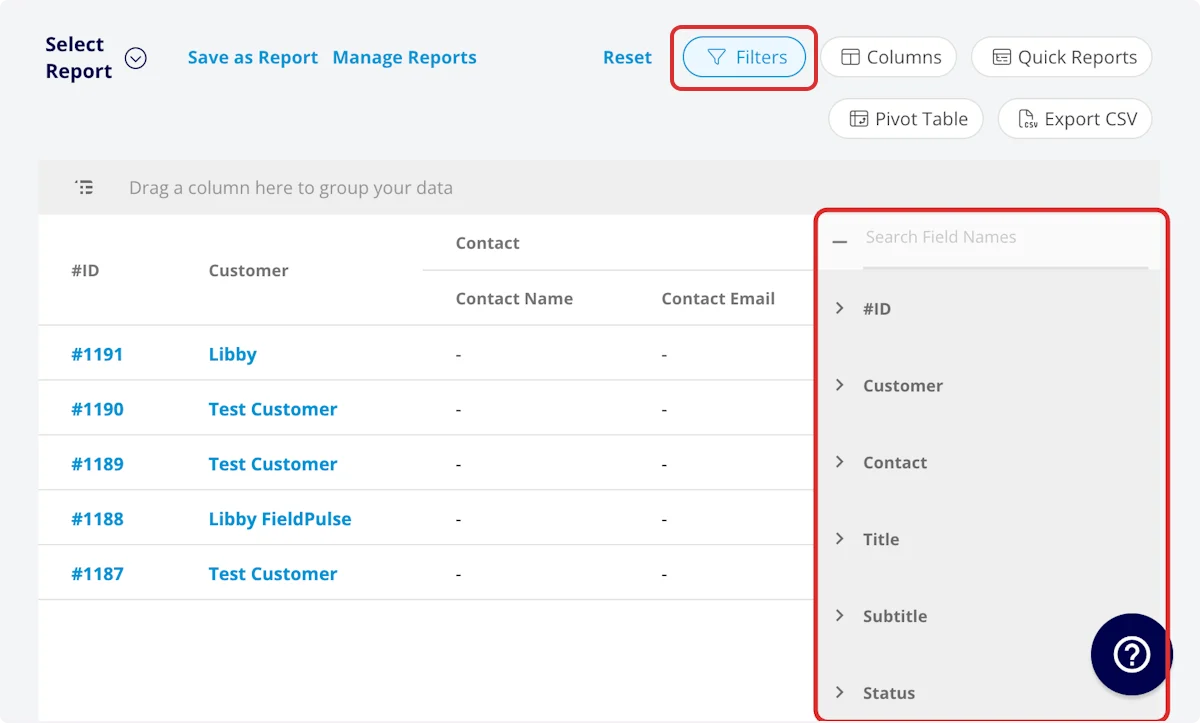
Filter operators
When you filter by contents, choose an operator and then enter the values to filter the data on.Common payment reports
Three payment reports come up most often. Each one is the same report grouped a different way — drag the column you care about into the grouping area, and keep that column in the report.Video walkthrough: Building payments by method, by team member, and by customer